


The first kitchentop price calculator running on a 2D bin-packing algorithm — turning a manual, expert-only quote into an instant, self-serve one.

Product
Website
Domain
Construction & renovation
Client
Role
Service designer, Web developer
Activities
Metrics
Countertop pricing was a manual, expert-only process, calculated by a trained person in CAD. Customers couldn't get a fast, reliable quote and the business couldn't scale quoting — and two very different audiences, B2B furnishers and B2C homeowners, shopped in completely different ways.
A self-serve calculator that prices correctly in slabs using a 2D bin-packing algorithm, working for both people just exploring and people ready to buy — with material search, configuration, instant pricing, and a hidden cutting-layout map for trade clients.
Pricing became instant, clear and self-serve, so the business could give quotes at scale without manual work — which raised customer confidence and increased both B2C and B2B revenue.
Roleplay calculations with the owner; Excel low-fi prototype to reproduce the math.
Mapping the B2B purchase path and specific B2B needs.
Feature comparison across 24 competing calculators (direct and indirect competition).
Getting statistics from 78 real B2C leads (Instagram ads) on most-wanted features.
Combining external lean-cutting tools with an Excel calculator allowed to test the concept with stakeholders. Some formula adjustments were made after.
Try in GoogleSheets
1 B2C persona, 3 B2Bs + the client (stonecraftsman) persona. Each with their distinct needs and fears.
The B2C map shows that people don't trust anyone anymore at this stage of home renovation :)
Doesn't matter what persona is it, based on their renovation stage they search either starting from dimensions or from visuals.
Identified core feature set and visual style that fits the product.
I ended up with three-column layout, precisely supporting both user flows: the early-bird inspiration hunters and determined price seekers. The mobile layout was hard to deal with, but based on customer statistics I prioritized inspiration hunters flow.
Check it live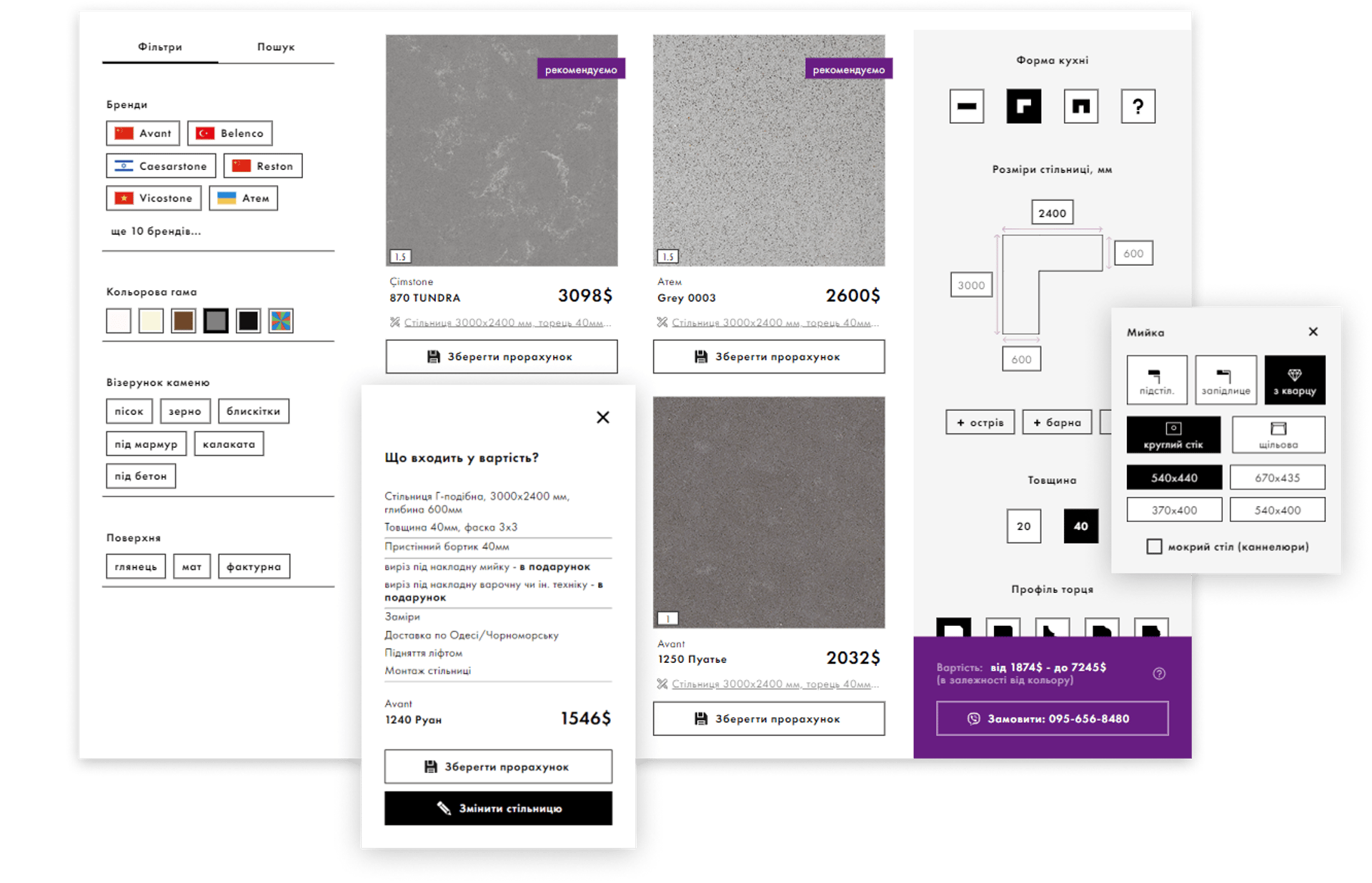
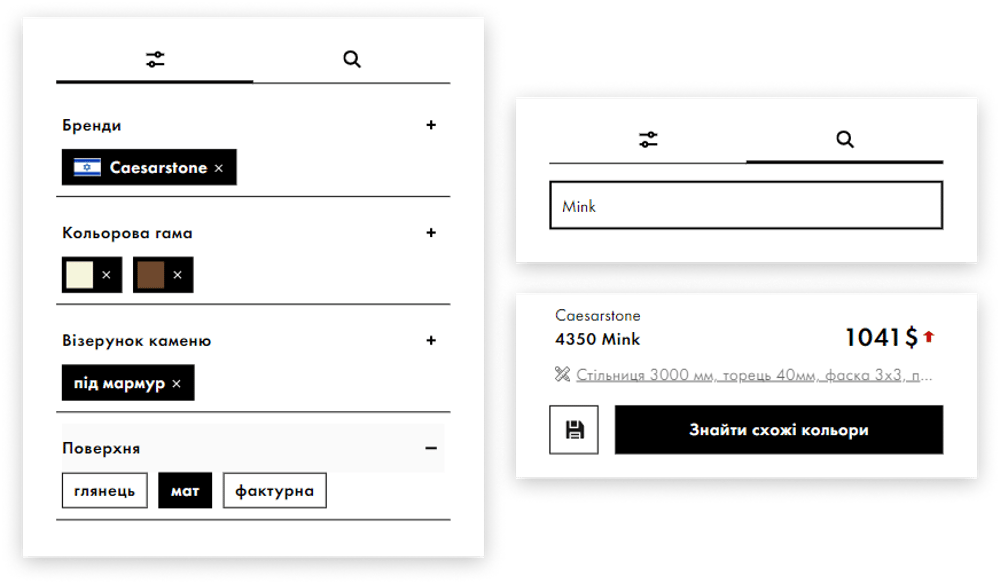
Filters
Help in discovering materials based on Brand name, Color, Pattern and Surface finish.
Direct material search
For the situation where a certain stone color needs to be found quickly.
Find similar
Allows to discover similar stone colors across the brands and find more affordable ones.
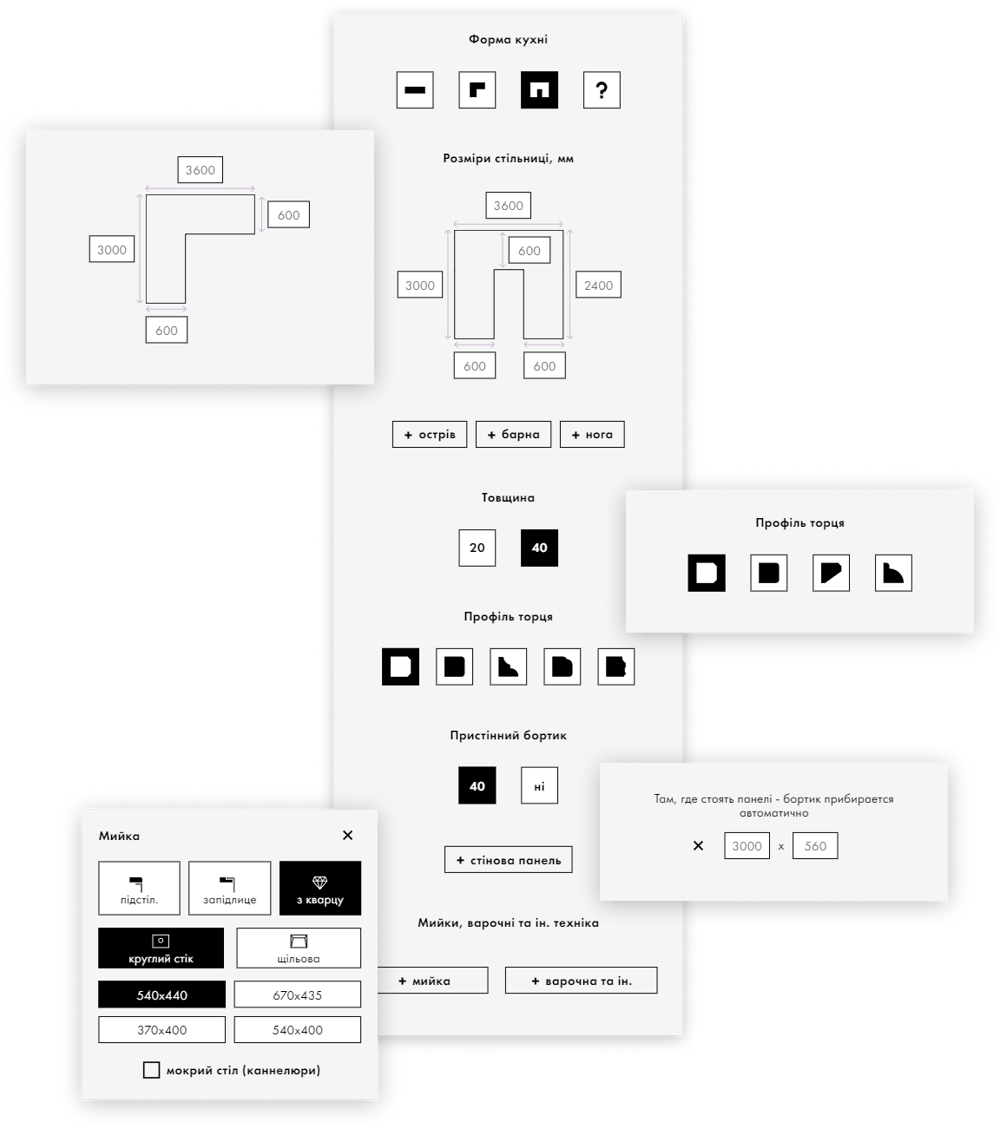
Product shape & size
Supports I, L, U shapes — which are 90% of all the orders. For more complex ones suggests to send the sketch to the company.
Add parts
Allows to add extras: kitchen island, bar counter, vertical supports, backsplashes.
Edge shape
Offers 2 thickness options and several decorative facets which impacts the price.
Cutouts and sinks
Offers a variety of cutouts for different types of appliances: undermount sinks, integrated basins etc.
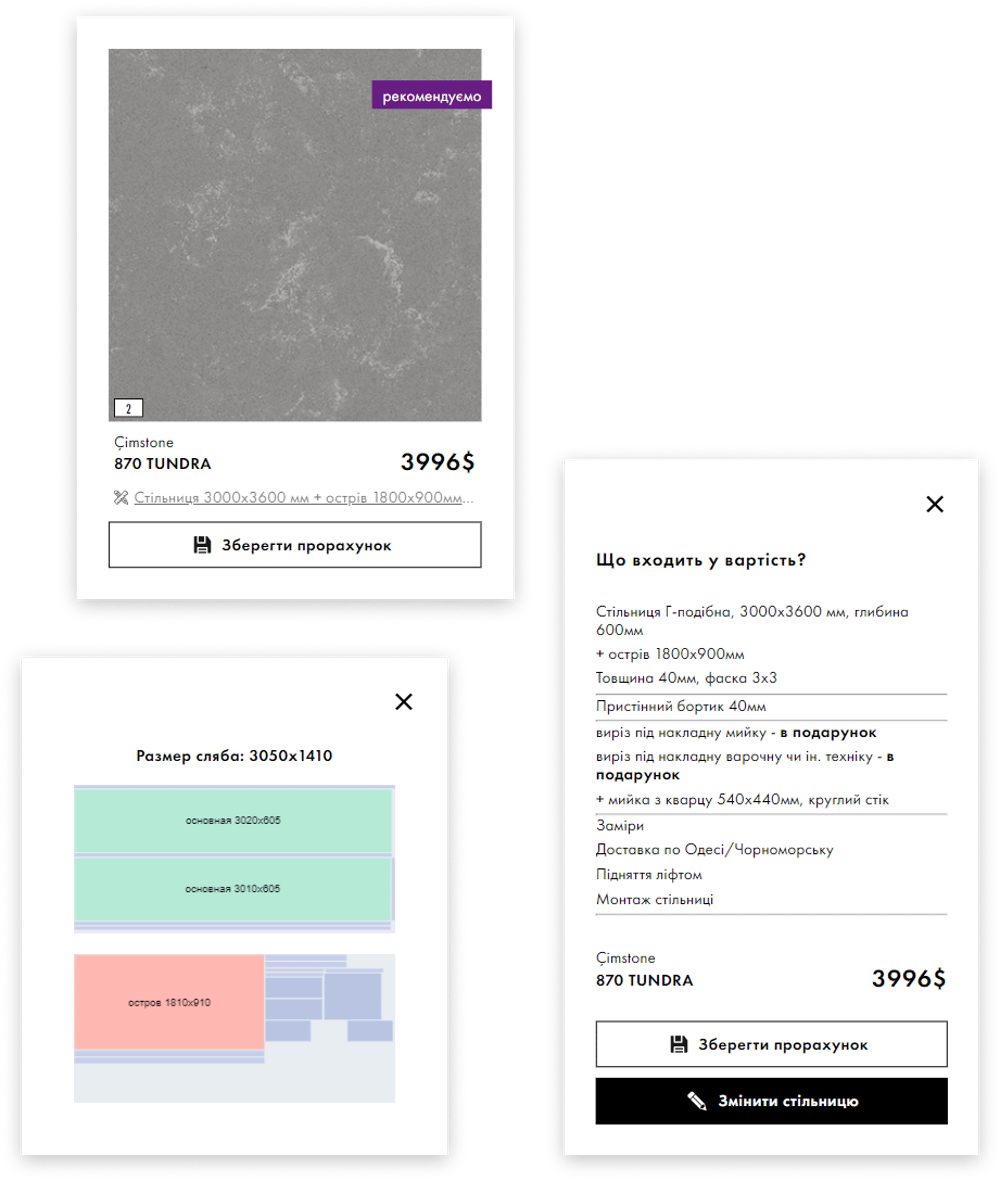
Name & specs
Shows Brand name, Color name, Surface finish (in case it is non-standard). Labels mark the availability of exact stone colors, and highlight the most popular ones.
Price
Displays the final cost of the countertop based on its dimensions and features. Updates itself automatically when sizing changes.
Save the offer
Sends the relevant item card to the client's email.
Secret feature: cutting layout
Shows the precise material cutting map when clicked. Bulk clients are told about it privately, others aren't supposed to check it.
visually-driven B2C clients want live photos the business can't supply at scale (500+ stone colors).
Potential: an AR try-on for color/thickness in the client's own interior.
small orders work in the current UI; bigger ones (e.g. 6 windowsills) don't.
Potential: a windowsill product tab with adjusted inputs.
by local business design, deals close on-site only.
Potential: a conventional purchase flow once proper remote sales infrastructure exists.
